관련 글(Related Posts)

HOME → ENGLISH VERSION →
Custom-made Raspberry Pi case with an Ai camera
The release of the Ai camera by the Raspberry Pi Foundation marked the beginning of the everyday era of Ai cameras, and this is a custom-made Raspberry Pi case with an Ai camera fitting that occasion.
Ai Camera
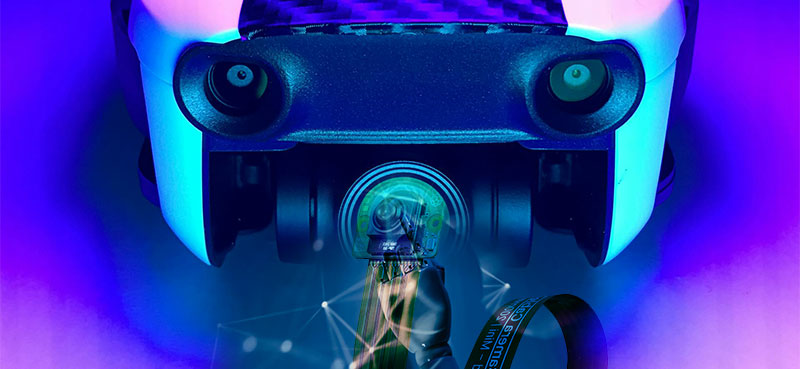
The Raspberry Pi’s Ai camera provides Sony’s iMX500 image sensor as on-chip.
The iMX500 integrates a dedicated processor capable of performing Ai processing simultaneously with image capture, and can realize various Ai functions such as real-time object detection, image classification, and image enhancement using various neural network models with low power consumption and low latency.
Thanks to this, Raspberry Pi users can now easily take advantage of Ai features without needing a separate accelerator.
In addition, using Sony’s Ai tool set can transform existing neural network models that use frameworks such as TensorFlow or PyTorch into ones that can be efficiently run on Ai cameras.
In addition, it may also be possible to design a new model that takes advantage of specific functions of the Ai accelerator.
The Ai camera module delivers a resolution of 12.3 MP and can record video at 10 frames per second at 4056 x 3040 resolution, and at 40 frames per second at 2028 x 1520 resolution.
It also has manual focus adjustment, offers a 76˚ field of view, and measures 25(W) x 24(L) x 11.9(H)(mm).
Raspberry Pi Ai camera Utilization Module Configuration
It consists of a PoE+ NVMe HAT and an Ai camera, enabling the Raspberry Pi 5 to be equipped with an active cooling fan and to securely store images and videos transmitted in real time via an AI camera onto an SSD safely, using a PoE+ NVMe HAT.

Raspberry Pi Ai camera case structure
The basic structure is based on our JDUO 4C R1, with an Ai camera lens exposed on the top of the case.
The material used is aluminum alloy, and after machining, it was finished with anodizing.
Looking at the structure, the case is fastened with two screws from the front.

Active cooling fans mainly handle heat dissipation, and on the right side of the case there is a square hole for exposed connectors, while the left side is sealed.

The image below shows the left side of the case.

The back of the case has a square hole for exposed terminals, and air holes are cut out at the top and bottom to help air circulate.

The image below shows the floor.

Closing remarks
The world is now engaged in fierce competition over the development of Ai-based solutions and platforms.
Even without mentioning the Ai image sensor built into the latest smartphones, it has long been used to detect product defects or improve production line efficiency.
By utilizing a real-time object detection model, it is possible to identify empty parking spaces in real time and alert drivers, and by tracking traffic flow, it can also be applied to improve traffic flow after analyzing vehicle types and speeds as well as congested conditions.
Through smart factory and smart city solutions like the ones mentioned above, Ai has already become deeply embedded in our daily lives, and to reflect this, the Raspberry Pi Foundation and Sony collaborated to create the Raspberry Pi Ai Camera.
This does not merely mean that it remains at the level of reflecting social phenomena, nor is it limited to a specific field, but rather that Ai cameras have come close to our everyday lives.
Through this custom-made Raspberry Pi AI camera case order, we were able to have an interesting experience for ourselves as well, and it seems to have provided an opportunity to shift our focus toward developing various modified forms of Raspberry Pi cases.
2026년 08월 21일
작성자 소개: 관리자(Admin)

HOME → ENGLISH VERSION →
Custom-made Raspberry Pi case with an Ai camera
The release of the Ai camera by the Raspberry Pi Foundation marked the beginning of the everyday era of Ai cameras, and this is a custom-made Raspberry Pi case with an Ai camera fitting that occasion.
Ai Camera
The Raspberry Pi’s Ai camera provides Sony’s iMX500 image sensor as on-chip.
The iMX500 integrates a dedicated processor capable of performing Ai processing simultaneously with image capture, and can realize various Ai functions such as real-time object detection, image classification, and image enhancement using various neural network models with low power consumption and low latency.
Thanks to this, Raspberry Pi users can now easily take advantage of Ai features without needing a separate accelerator.
In addition, using Sony’s Ai tool set can transform existing neural network models that use frameworks such as TensorFlow or PyTorch into ones that can be efficiently run on Ai cameras.
In addition, it may also be possible to design a new model that takes advantage of specific functions of the Ai accelerator.
The Ai camera module delivers a resolution of 12.3 MP and can record video at 10 frames per second at 4056 x 3040 resolution, and at 40 frames per second at 2028 x 1520 resolution.
It also has manual focus adjustment, offers a 76˚ field of view, and measures 25(W) x 24(L) x 11.9(H)(mm).
Raspberry Pi Ai camera Utilization Module Configuration
It consists of a PoE+ NVMe HAT and an Ai camera, enabling the Raspberry Pi 5 to be equipped with an active cooling fan and to securely store images and videos transmitted in real time via an AI camera onto an SSD safely, using a PoE+ NVMe HAT.
Raspberry Pi Ai camera case structure
The basic structure is based on our JDUO 4C R1, with an Ai camera lens exposed on the top of the case.
The material used is aluminum alloy, and after machining, it was finished with anodizing.
Looking at the structure, the case is fastened with two screws from the front.
Active cooling fans mainly handle heat dissipation, and on the right side of the case there is a square hole for exposed connectors, while the left side is sealed.
The image below shows the left side of the case.
The back of the case has a square hole for exposed terminals, and air holes are cut out at the top and bottom to help air circulate.
The image below shows the floor.
Closing remarks
The world is now engaged in fierce competition over the development of Ai-based solutions and platforms.
Even without mentioning the Ai image sensor built into the latest smartphones, it has long been used to detect product defects or improve production line efficiency.
By utilizing a real-time object detection model, it is possible to identify empty parking spaces in real time and alert drivers, and by tracking traffic flow, it can also be applied to improve traffic flow after analyzing vehicle types and speeds as well as congested conditions.
Through smart factory and smart city solutions like the ones mentioned above, Ai has already become deeply embedded in our daily lives, and to reflect this, the Raspberry Pi Foundation and Sony collaborated to create the Raspberry Pi Ai Camera.
This does not merely mean that it remains at the level of reflecting social phenomena, nor is it limited to a specific field, but rather that Ai cameras have come close to our everyday lives.
Through this custom-made Raspberry Pi AI camera case order, we were able to have an interesting experience for ourselves as well, and it seems to have provided an opportunity to shift our focus toward developing various modified forms of Raspberry Pi cases.
2026년 08월 21일
작성자 소개: 관리자(Admin)
관련 글(Related Posts)
HOME → ENGLISH VERSION →
Custom-made Raspberry Pi case with an Ai camera
The release of the Ai camera by the Raspberry Pi Foundation marked the beginning of the everyday era of Ai cameras, and this is a custom-made Raspberry Pi case with an Ai camera fitting that occasion.
Ai Camera
The Raspberry Pi’s Ai camera provides Sony’s iMX500 image sensor as on-chip.
The iMX500 integrates a dedicated processor capable of performing Ai processing simultaneously with image capture, and can realize various Ai functions such as real-time object detection, image classification, and image enhancement using various neural network models with low power consumption and low latency.
Thanks to this, Raspberry Pi users can now easily take advantage of Ai features without needing a separate accelerator.
In addition, using Sony’s Ai tool set can transform existing neural network models that use frameworks such as TensorFlow or PyTorch into ones that can be efficiently run on Ai cameras.
In addition, it may also be possible to design a new model that takes advantage of specific functions of the Ai accelerator.
The Ai camera module delivers a resolution of 12.3 MP and can record video at 10 frames per second at 4056 x 3040 resolution, and at 40 frames per second at 2028 x 1520 resolution.
It also has manual focus adjustment, offers a 76˚ field of view, and measures 25(W) x 24(L) x 11.9(H)(mm).
Raspberry Pi Ai camera Utilization Module Configuration
It consists of a PoE+ NVMe HAT and an Ai camera, enabling the Raspberry Pi 5 to be equipped with an active cooling fan and to securely store images and videos transmitted in real time via an AI camera onto an SSD safely, using a PoE+ NVMe HAT.
Raspberry Pi Ai camera case structure
The basic structure is based on our JDUO 4C R1, with an Ai camera lens exposed on the top of the case.
The material used is aluminum alloy, and after machining, it was finished with anodizing.
Looking at the structure, the case is fastened with two screws from the front.
Active cooling fans mainly handle heat dissipation, and on the right side of the case there is a square hole for exposed connectors, while the left side is sealed.
The image below shows the left side of the case.
The back of the case has a square hole for exposed terminals, and air holes are cut out at the top and bottom to help air circulate.
The image below shows the floor.
Closing remarks
The world is now engaged in fierce competition over the development of Ai-based solutions and platforms.
Even without mentioning the Ai image sensor built into the latest smartphones, it has long been used to detect product defects or improve production line efficiency.
By utilizing a real-time object detection model, it is possible to identify empty parking spaces in real time and alert drivers, and by tracking traffic flow, it can also be applied to improve traffic flow after analyzing vehicle types and speeds as well as congested conditions.
Through smart factory and smart city solutions like the ones mentioned above, Ai has already become deeply embedded in our daily lives, and to reflect this, the Raspberry Pi Foundation and Sony collaborated to create the Raspberry Pi Ai Camera.
This does not merely mean that it remains at the level of reflecting social phenomena, nor is it limited to a specific field, but rather that Ai cameras have come close to our everyday lives.
Through this custom-made Raspberry Pi AI camera case order, we were able to have an interesting experience for ourselves as well, and it seems to have provided an opportunity to shift our focus toward developing various modified forms of Raspberry Pi cases.
2026년 08월 21일
작성자 소개: 관리자(Admin)